

A cybersecurity review should deliver more than a list of gaps.
It should show organizations where risk is concentrated, which improvements matter most, and how to turn limited time, budget, and expertise into measurable progress. Yet even a thorough assessment can fall short if organizations don't translate its findings into clear priorities and sustained progress.
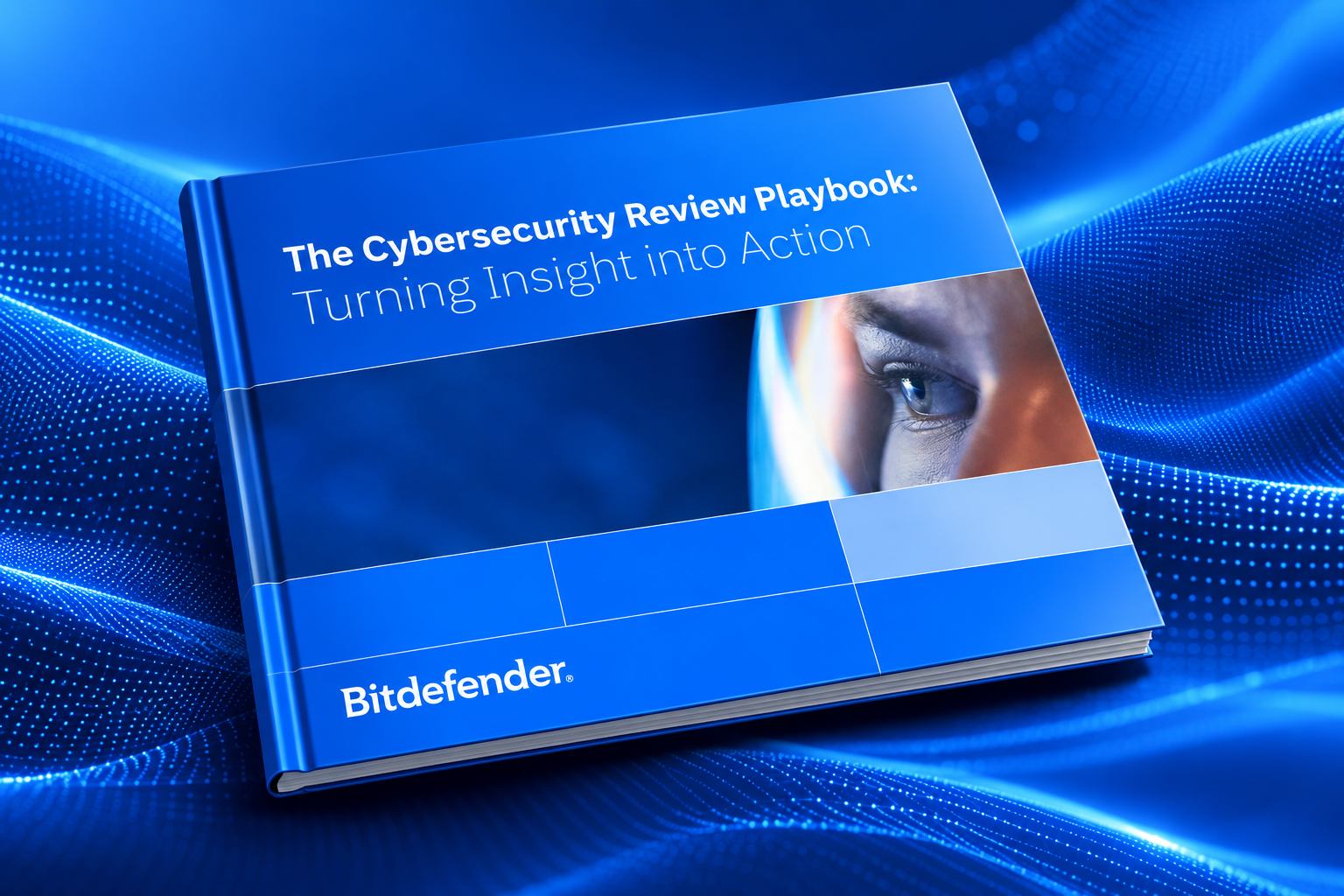
That is why Bitdefender created the new Cybersecurity Review Playbook: Turning Insight into Action. This practical guide explains what an effective cybersecurity review should accomplish, how to prepare for one, and how to transform the results into a business-aligned roadmap for stronger cyber resilience.
Why Do Cybersecurity Reviews Matter Now?
Cybersecurity reviews matter because organizations often operate with an incomplete picture of risk, even those with established security programs.
Modern environments change constantly. New applications, cloud services, identities, third-party connections, vulnerabilities, and AI tools expand an organization’s exposure faster than security teams can evaluate it. Meanwhile, those teams must balance immediate operational demands against longer-term improvements.
A cybersecurity review helps bring that picture into focus. It establishes a baseline of current security maturity, assesses risk across people, processes, and technology, and identifies where resources can have the greatest impact. Instead of treating every weakness as equally urgent, the review helps organizations determine what to address first and why.
How Does a Compliance Audit Compare to a Cybersecurity Review?
A compliance audit typically asks whether an organization meets a defined set of requirements at a particular point in time. Compliance and cyber resilience are connected, but they are not interchangeable. A cybersecurity review asks a broader question: How resilient is the organization, and where should it focus its attention and resources next?
In other words, passing an audit does not necessarily reveal whether controls operate effectively in practice, whether emerging threats have created new gaps, or whether existing investments align with the risks most likely to disrupt the business.
An effective review can evaluate security against recognized frameworks such as the NIST Cybersecurity Framework, ISO/IEC 27001, ISO/IEC 42001, and CIS Controls while also accounting for the organization’s business priorities, regulatory obligations, and threat environment.
How Can Organizations Turn a Cybersecurity Review Into Action?
The report created during a cybersecurity review is the starting point for translating findings into a practical roadmap. Evaluate high-impact risks by likelihood, exploitability, potential business impact, and relevance to the organization. Remediation can then be sequenced to address dependencies, balance quick wins with strategic initiatives, and reflect available budgets and resources.
Some improvements may be immediate: closing dormant accounts, enforcing multifactor authentication, correcting misconfigurations, or updating outdated policies. Others, such as modernizing identity and access management, consolidating overlapping tools, or formalizing third-party risk management, may require a longer planning horizon.
Progress must also be measured. Metrics such as time to remediate critical risks, reduction in attack surface, policy adoption, and improvements in detection coverage help demonstrate whether remediation is producing meaningful results.
What's Included in the New Cybersecurity Review Playbook?
The new Cybersecurity Review Playbook: Turning Insight into Action walks security and business leaders through the full review lifecycle. It includes:
- A security maturity model and self-scoring benchmark
- Guidance for choosing the appropriate type of cybersecurity review
- Core control domains that a comprehensive review should examine
- Steps for preparing stakeholders and gathering documentation
- A structured assessment methodology
- Suggestions for prioritizing findings and developing a remediation roadmap
- Recommendations for reporting results to executives, technical teams, auditors, customers, and partners
- Practical approaches for measuring progress and continuously improving resilience
Whether your organization is conducting its first structured assessment or refining an established security program, the Cybersecurity Review Playbook can help you ask better questions and extract more value from the process.
Download the new Cybersecurity Review Playbook: Turning Insight into Action to evaluate your current approach and begin building a clearer path from assessment to improvement.
What Are the Benefits of an Independent Cybersecurity Review vs. Self-Assessment?
Self-assessment is a valuable starting point, but it has limits. Internal teams are close to the systems and processes they evaluate. Familiarity, competing priorities, limited staffing, and a lack of external benchmarks can make important gaps harder to recognize or prioritize objectively.
An independent cybersecurity review adds perspective and validation. Experienced assessors can evaluate both the design and operational effectiveness of controls, compare the organization’s posture with recognized frameworks, and translate technical findings into business consequences. The result is not simply a maturity score, but a risk-ranked set of findings and a defensible roadmap for improvement.
Bitdefender Cybersecurity Advisory Services offers flexible review options for organizations at different stages of maturity, from the Cybersecurity Review Essentials Workshop for lean IT and security teams to full-scale reviews, framework-based assessments, and Frontier AI Readiness Assessments.
Each engagement helps organizations see their environment more clearly, direct investments toward the risks that matter most, and move from reactive security decisions to sustained, measurable improvement.
Ready for an objective view of your security posture? Work with Bitdefender for an Independent Cybersecurity Review and turn your next assessment into meaningful action.